Jumping Spiders
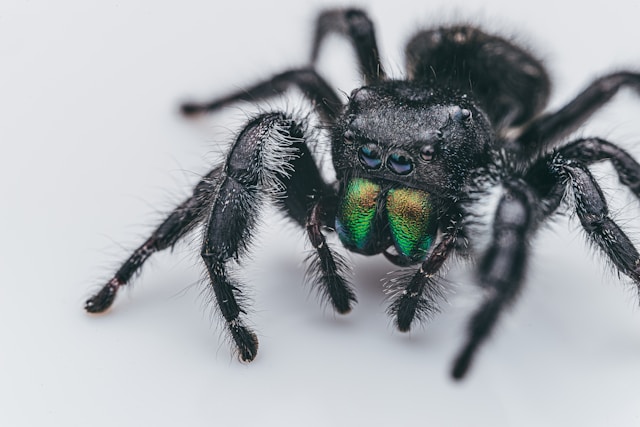
Jumping Spiders
Solutions Tailored For You
Your Spider problems, Gone For Good, Guaranteed. Our experts provide fast, effective eradication and prevention.
Description of Jumping Spiders
The Jumping Spider family (Salticidae) contains more than 500 described genera and about 5,000 described species, making it the largest family of spiders. Jumping spiders have good vision and use it for hunting and navigating.
Excellent Vision
They use their good vision for both hunting and navigating their environment.
Silk Tethers
Capable of jumping from place to place, secured by a silk tether for safety.
Size
Adults rarely grow larger than one inch.
Common Appearance
Some common house jumping spiders appear black with white markings along the abdomen.
Quick Facts
Key characteristics of jumping spiders.
The Fascinating Biology of Jumping Spiders
Learn about what makes these spiders unique and capable predators.
Leaping Abilities
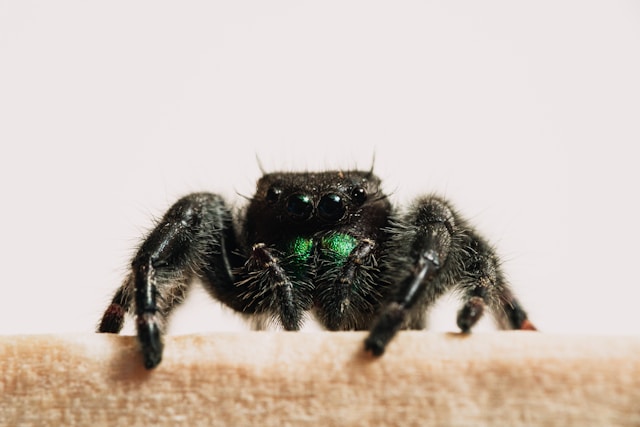
Jumping spiders are known for their swift reflexes and leaping abilities. These spiders are capable of leaping as high as 25 times their own size and as such, are extremely capable predators.
Impressive Eyesight
Jumping spiders also possess impressive eyesight, which aids in their excellent hunting and navigation skills, allowing them to precisely track prey.
Understanding Jumping Spider Behavior
Their unique traits set them apart from other spider species.
Curiosity
Jumping spiders are known for their curiosity. If approached by a human hand, instead of scuttling away to safety as most spiders do, the jumping spider will usually leap and turn to face the hand.
Adhesive Feet
Jumping spiders are a scopula-bearing spider, which means that they have a very interesting tarsal section. At the end of each leg they have hundreds of tiny hairs, which each then split into hundreds more tiny hairs, each tipped with an “end foot”. These thousands of tiny feet allow them to climb up and across virtually any terrain. They can even climb up glass by gripping onto the tiny imperfections, usually an impossible task for any spider.
Active Hunters
Jumping spiders are active hunters, which means that they do not rely on a web to catch their prey. Instead, these spiders stalk their prey. They use their superior eyesight to distinguish and track their intended meals, often for several inches. Then, they pounce, giving the insect little to no time to react before succumbing to the spider’s venom.
Talk to an Expert
We’ll be in touch to personalize your pest protection plan.
Need Immediate Spider Control?
Don’t wait for the problem to get worse. Our emergency team is ready to respond 24/7 to severe infestations.