CARPENTER BEES
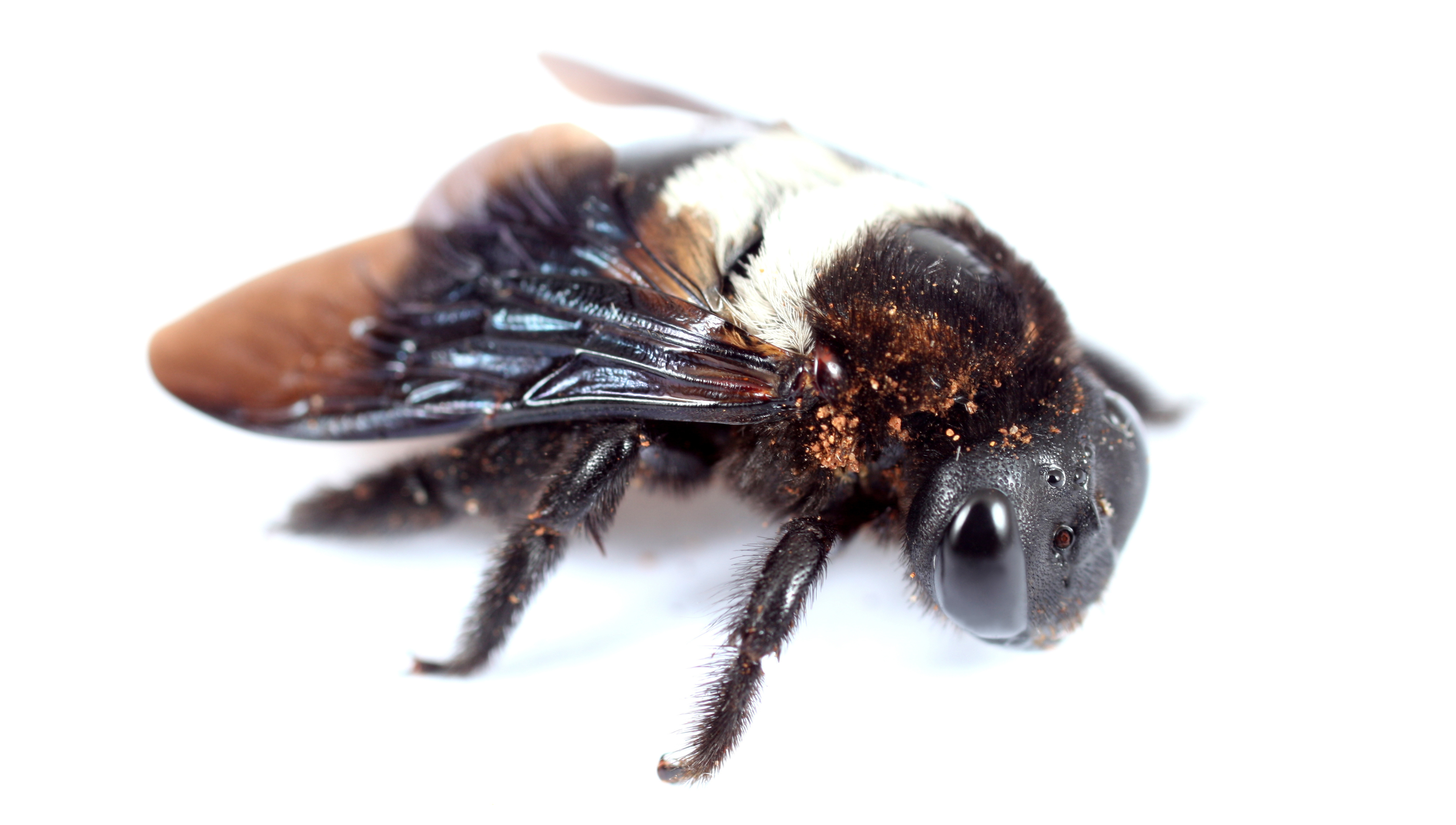
Carpenter Bees
Control Experts
Your Carpenter Bees Problem, Gone For Good, Guaranteed.
What Are Carpenter Bees?
Carpenter bees are large, robust insects that look like bumble bees. They differ by having a bare, shiny black abdomen compared to bumble bees which have a hairy abdomen with some yellow markings.
Size
1/2 to 1 inch long
Appearance
Shiny black abdomen, unlike the hairy abdomen of bumble bees.
Habitat
Bore holes into wood for nesting, preferring unpainted wood but also attacking painted/stained wood.
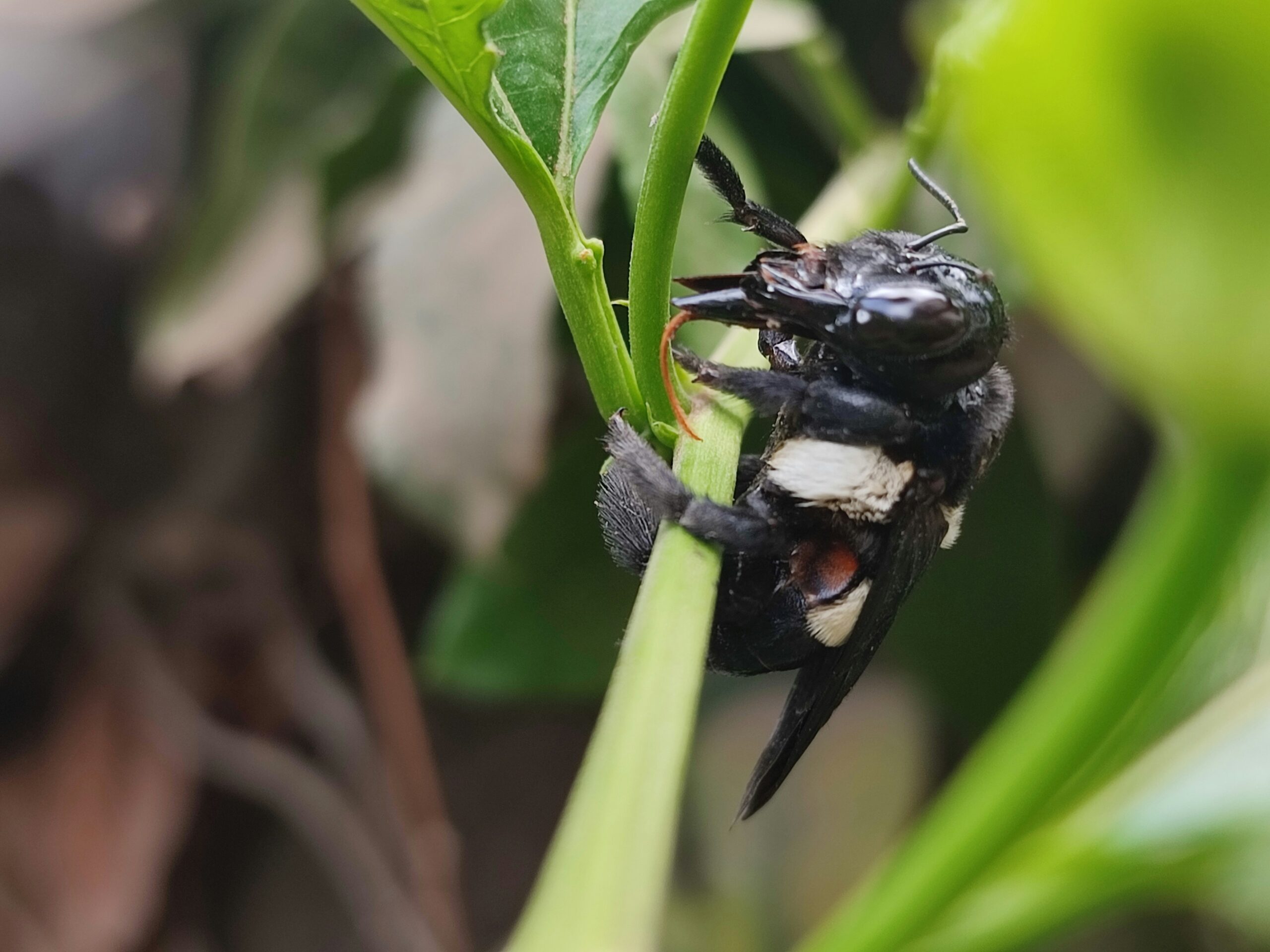
Life Cycle of Carpenter Bees
Understanding their life cycle is crucial for effective control and prevention.
Overwintering & Mating
Adults overwinter in galleries, emerging in the spring to mate.
Nest Building
The female prepares a nest by excavating a new site or more frequently by cleaning out and expanding an existing tunnel. A new gallery may be 6″ long, while older ones can extend several feet.
Brood Cells
She places a mass of pollen mixed with nectar, lays an egg on it, and builds a partition of chewed wood pulp to form a brood cell. Six to eight brood cells are constructed in each gallery.
Development
The bee larvae develop on the pollen and emerge as adults 30 to 40 days later, usually in late summer. There is one generation per year.
Carpenter Bee Behavior and Damage
Understanding their habits helps in identifying infestations and planning effective treatment.
Wood Borers
Carpenter bees bore holes into wood to create a tunnel in which to raise their young. They attack decks, siding, landscape timbers, and even lawn furniture.
Preferred Wood
They seem to prefer unpainted wood, but they will also attack painted or stained wood. Soft wood, such as California redwood, cedar, white pine, and poplar is preferred for nest building.
Distinctive Entry Holes
The initial opening is straight into the wood and is cut in an almost perfect circle. Entry holes are usually located in well-lit and sheltered areas.
Common Locations
Often found in headers, roof eaves, porch ceilings, fascia boards, decks, doors, and window sills.
Stinging Behavior
Male carpenter bees are very aggressive but have no stinger. Females have a potent stinger but seldom sting.
Not Social Insects
Unlike yellow jackets and honey bees, carpenter bees are not social insects; they do not live in nests or colonies. They build individual nests for their young.
Effective Carpenter Bee Elimination
Our proven 4-step process ensures complete elimination and long-term prevention
Inspection
Thorough examination to identify burrow locations, wood damage, and infestation severity.
Custom Plan
Develop targeted treatment strategy based on the extent of carpenter bee activity and property conditions.
Treatment
Apply professional-grade insecticides directly into bore holes and implement other control methods.
Prevention
Seal existing holes, advise on wood treatment, and offer ongoing monitoring to prevent re-infestation.
Keep Carpenter Bees Away
Simple steps to deter carpenter bees and protect your wooden structures.
Paint or Treat Wood
Carpenter bees prefer unpainted wood. Using paint, varnish, or wood stain can deter them.
Seal Existing Holes
Once treated, plug existing holes with wood putty or dowels to prevent reuse by new bees and to maintain structural integrity.
Regular Inspections
Periodically inspect susceptible wooden structures, especially during spring, for new holes or activity.
Schedule Your Service
We’ll be in touch to personalize your pest protection plan:
Need Immediate Carpenter Bee Control?
Don’t let carpenter bees damage your property. Our team is ready to provide fast and effective solutions.