Pharaoh Ant
Pharaoh Ant Control
Experts
Your Ant Problem, Gone For Good, Guaranteed.
Understanding Pharaoh Ants
Pharaoh Ants are more than just a nuisance; they can rapidly spread and contaminate areas. Professional treatment is essential for effective removal.
Small and Elusive
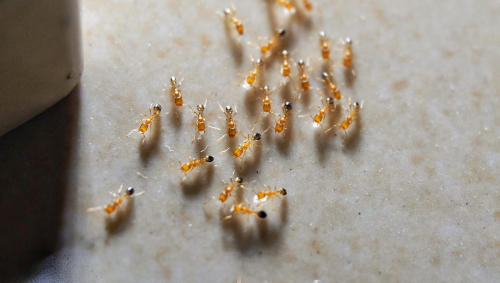
Pharaoh Ants are very small, about 1/16 inch long, making them difficult to spot and track.
Hidden Nesting Sites
The entire colony can exist under a wet mop in a broom closet, or in a light switch box on the wall, making them hard to find.
Rapid Reproduction and Spread
New colonies are formed by “budding,” where part of the main colony moves to a new location, leading to rapid spread.
Disease Transmission
Pharaoh ants are known to carry and spread pathogens, posing health risks, especially in hospitals or food preparation areas.
Pharaoh Ant Facts
Understanding your enemy is the first step to elimination
The Complex Life of Pharaoh Ants
Understanding their biology is key to effective control, as they don’t behave like other ants.
Colony Structure
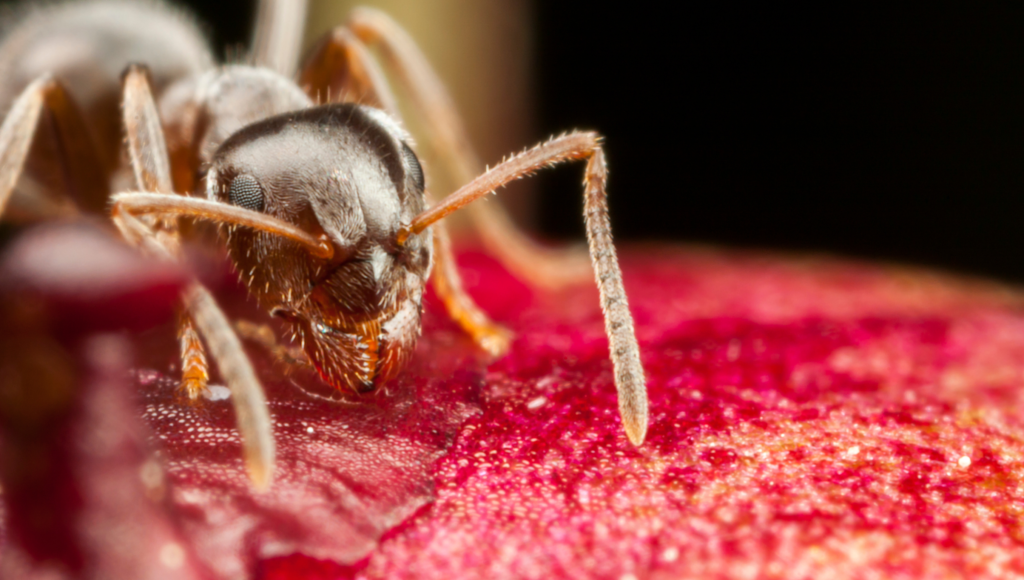
Pharaoh ants do not swarm; females mate in the nest. New colonies are formed by “budding,” meaning part of the main colony moves to a new location. There may be hundreds of thousands of ants in a colony.
Reproduction Cycle
The queens are about twice the size of the workers and are a dark brown color. There are multiple queens in the colony all laying eggs at the same time. A female produces 350 to 400 eggs in her lifetime. The entire life cycle is completed in 38 to 48 days at room temp. Indoors, these ants develop year-round.
Professional Pharaoh Ant Elimination
Our proven 4-step process ensures complete elimination and long-term prevention
Inspection
Thorough examination to identify nesting areas, entry points, and infestation severity tailored for Pharaoh Ants.
Custom Plan
Develop a targeted treatment strategy that accounts for the unique budding nature of Pharaoh Ant colonies.
Treatment
Apply professional-grade baits and treatments designed to be carried back to and eliminate the multiple nests.
Prevention
Ongoing monitoring and maintenance to prevent re-infestation, addressing potential new budding sites.
Advanced Pharaoh Ant Eradication Techniques
We use specialized techniques to tackle the unique challenges posed by Pharaoh Ants
Non-Repellent Baits
Specially formulated baits that are attractive to Pharaoh Ants. Workers feed on it and carry it back to their multiple nests, effectively eliminating the queens and entire budding colonies.
- Targets all colonies
- Essential for Pharaoh Ants
- Long-lasting residual effect
Insect Growth Regulators (IGR)
IGRs disrupt the Pharaoh Ant life cycle, preventing them from maturing and reproducing. This is crucial for controlling their high reproductive rate and stopping the formation of new budding colonies.
- Stops reproduction
- Prevents maturation of larvae
- Crucial for long-term control
Integrated Pest Management (IPM)
An IPM approach combines various methods, including inspection, identification, treatment, and ongoing monitoring, to effectively manage and prevent Pharaoh Ant infestations, reducing reliance on conventional pesticides.
- Comprehensive strategy
- Minimizes pesticide use
- Sustainable pest control
Keeping Pharaoh Ants Away
Proactive steps to reduce Pharaoh Ant attraction and prevent future infestations.
Maintain Strict Cleanliness
Clean up food crumbs and spills immediately. Store food in airtight containers and regularly empty trash cans.
Eliminate Moisture Sources
Fix leaky pipes, faucets, and other sources of moisture. Pharaoh Ants are highly attracted to moisture.
Seal Entry Points
Seal cracks and crevices in walls, foundations, and around utility lines to prevent their tiny bodies from entering.
Talk to an Expert Today
Need Immediate Pharaoh Ant Control?
Pharaoh ants can quickly establish new colonies. Don’t wait for the problem to spread; our emergency team is ready to respond.