Yellow Jackets
Yellow Jackets:
Your Problem Gone For Good
Guaranteed removal of yellow jacket nests and colonies. Protect your family and property from painful stings and allergic reactions.
What Are Yellow Jackets?
Understanding these aggressive pests is the first step to effective removal.
Description
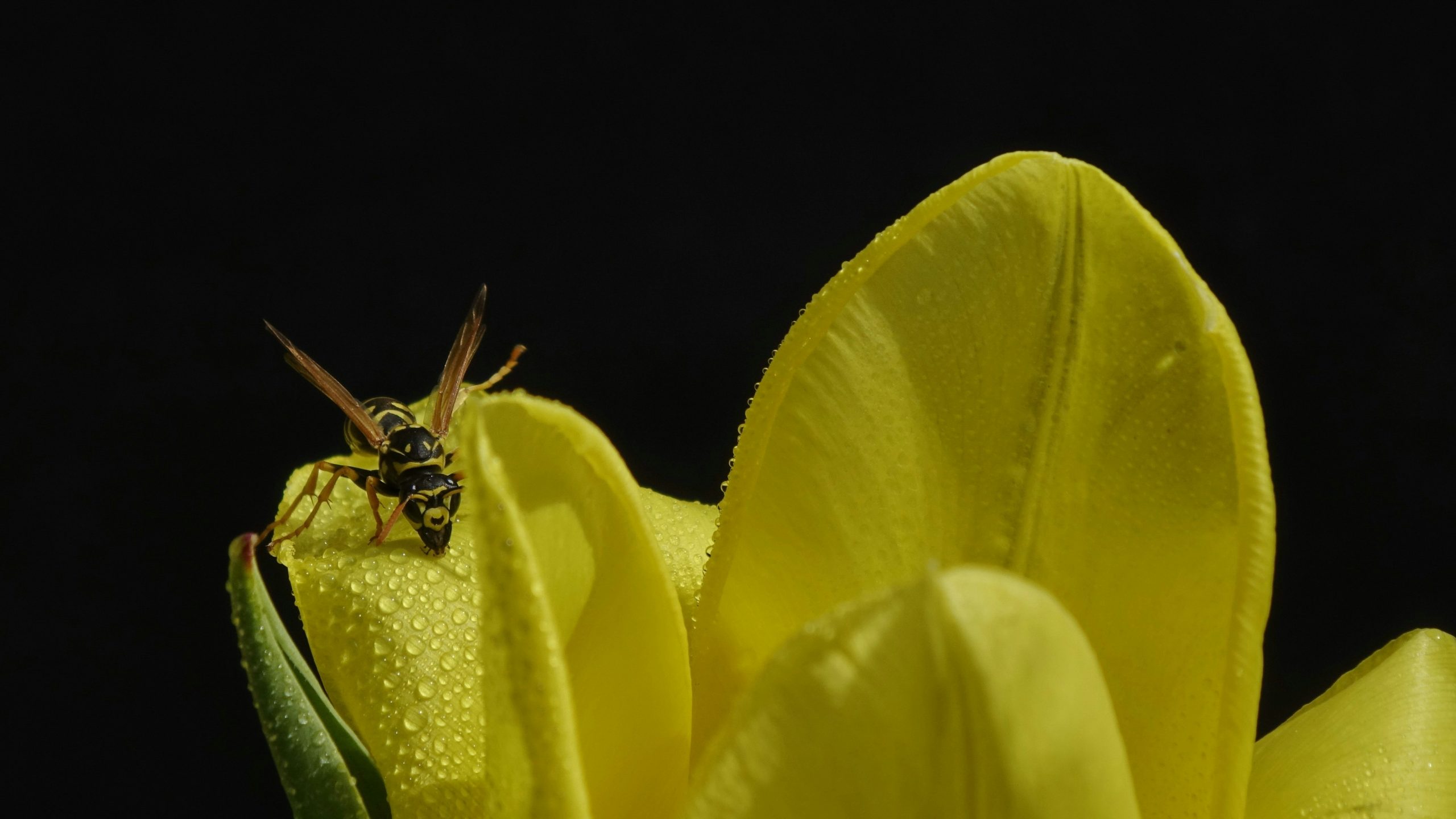
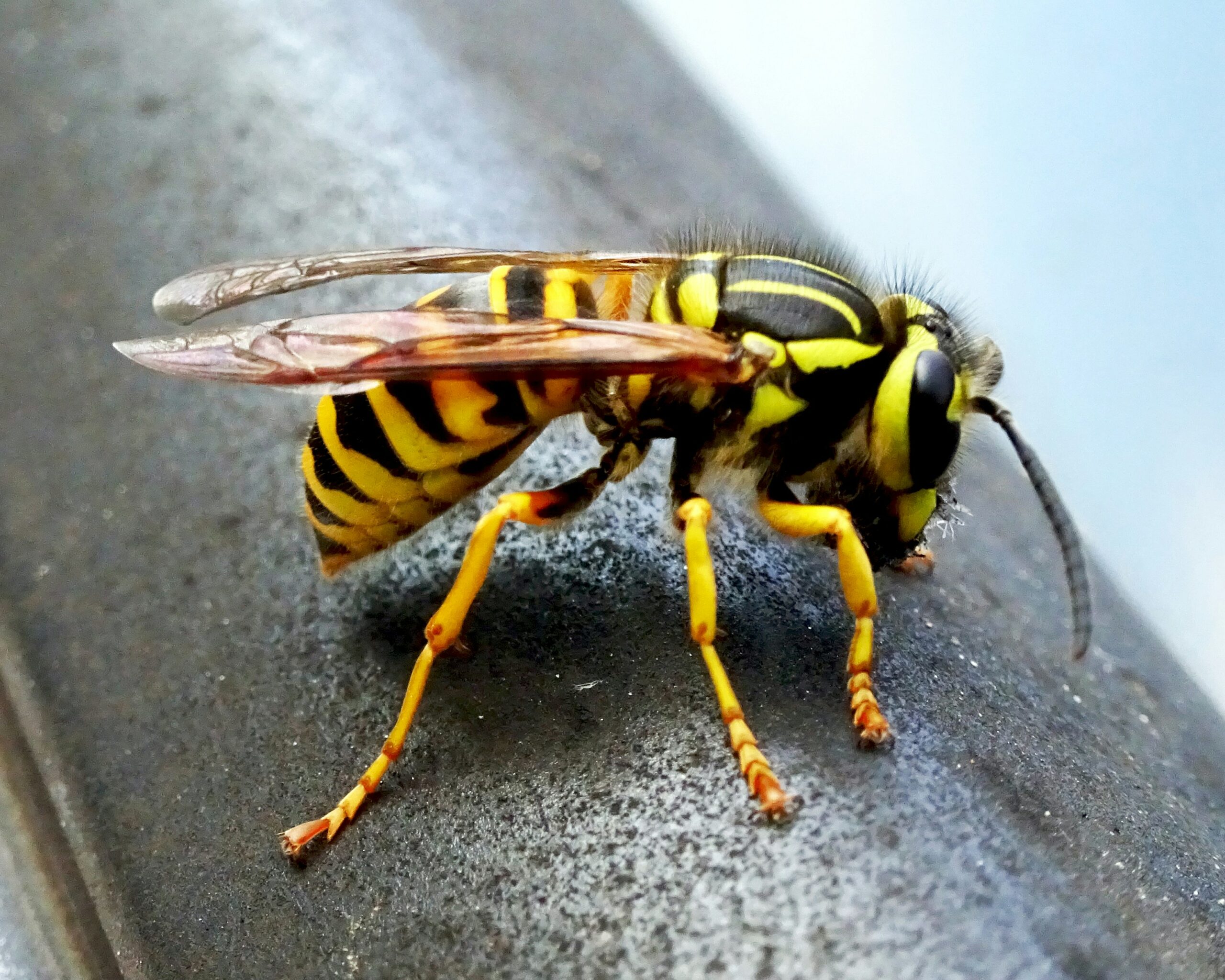
A typical yellow jacket worker is about .5″ inch long, with alternating bands on the abdomen while the queen is larger, about 0.75″ inch long.
Workers are sometimes confused with honey bees, especially when flying in and out of their nests. Yellow jackets, in contrast to honey bees, are not covered with tan-brown dense hair on their bodies and lack the flattened hairy hind legs used to carry pollen, and the yellow jacket’s waist is thin and defined.
Yellow Jacket Life Cycle & Nests
Understanding their reproductive and nesting habits is key to eradication.
Reproduction and Nesting
One queen will produce 25,000 eggs or more during her lifetime. It is one of the several species that may build its nest in holes in the ground, or will hang aerial nests in trees, shrubs, attics, barns, walls, etc.
Sometimes old nests have been built in protected places, such as an attic or between walls, and may be reused and expanded, producing up to 100,000 or more yellow jacket offspring.
Yellow Jacket Behavior & Risks
Learn about their diet, aggression, and why they pose a threat.
Diet, Social Structure, and Aggression
Yellow jackets are social hunters living in colonies containing workers, queens, and males. Colonies are annual with only inseminated queens overwintering.
Although adults feed primarily on items rich in sugars and carbohydrates (fruits, flower nectar, and tree sap), the larvae feed on proteins (insects, meats, fish, etc.). Adult workers chew and condition the meat fed to the larvae. Larvae in return secrete a sugar material relished by the adults. This exchange is known as trophallaxis.
In late summer, foraging workers change their food preference from meats to ripe decaying fruits or scavenge human garbage, sodas, picnics, etc., since larvae in the nest fail to meet requirements as a source of sugar. This is why yellow jackets are known largely as pests that are capable of ruining picnics. Although they lack the pollen-carrying structures of bees, yellow jackets can be minor pollinators when visiting flowers.
Known to be aggressive defenders of their colonies, yellow jackets are otherwise not quick to sting. The sting of a yellow jacket is painful and each insect is capable of delivering multiple stings. Yellow jacket stings may induce severe allergic reactions in some individuals.
Need Yellow Jacket Removal?
Don’t risk painful stings! Our experts provide guaranteed yellow jacket removal for your safety and peace of mind.